Wednesday, April 05, 2006

Bread man takes US by storm


August Vanderdonckt, a Belgian who emigrated to the United States 9 years ago, has made somewhat of a name for himself over in Florida. A report in Tuesday's edition of the daily 'De Morgen' says that the financial advisor's friends and neighbours are all mad about the bread that Mr Verdonckt bakes in his free time. He told the paper that American bread "tastes like cotton wool" and "has no chewy crust".
Most Americans buy their bread at the supermarket and although there are some baker's shops in the US, they often charge as much as 4 US Dollars for a loaf. READ ON

Tuesday, April 04, 2006

STUDS GIFT SHOP


OFFICIAL STUDS BEER GLASS

"honey...I just had one"


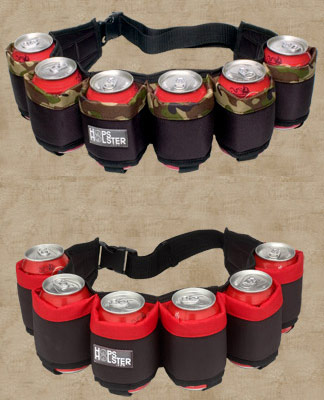
THE BEER HOLSTER


THE BEER HAMMER

Belgian chocolate a global fad


There's at least one area where Belgium rules the world -- chocolate -- a British newspaper reports. Belgium the chocolate country? Undoubtedly. And for two obvious reasons: firstly, annual per capita consumption is just under 20 kg
(all categories taken together, consumption of chocolate
"confectionery" alone accounting, in finished product terms, for 8.1
kg/year per head of population) and secondly, and more importantly,
because there are almost 300 chocolate-makers whose expertise and
skill long ago won over connoisseurs worldwide.
The country has 2,000 chocolate shops, or one for about every 5,000 residents. Its 290 manufacturers produce 172,000 tons of chocolate every year, even though 140 of them are boutique chocolatiers with fewer than five employees, The Independent reports.
Some candy-makers specialize only in one type of filling.
Passion Chocolate -- run by a woman who decided to go into business after her husband's death -- has become so fashionable that Belgian Prime Minister Guy Verhofstadt took its candies on a trade mission to the United States and its chocolates have been shipped to the White House. Another company, Chocolate Mary, has a photograph of President George W. Bush at the counter examining its products.
Smaller companies say the Internet is driving up their international sales. Chocolate Mary reports its air-freight shipments to the United States, India and South Korea have been doubling annually.

Expat Population in Brussels Continues to Grow


A 2005 population study has indicated the number of non-Belgians living in the 'Flemish edge' around bilingual Brussels is still increasing.
Liberal VLD MP Luk Van Biesen also said EU nationals are increasingly buying houses instead of renting, intensifying pressure on the housing market.
The MP urged the Flemish government to take initiatives to ensure that houses remain affordable for young Flemish people. "Currently, EU citizens are buying more than 50 percent of the homes offered up for sale. Earlier, foreigners were primarily found in the rental market," Van Biesen said.
"This evolution indicates a longer-term presence of especially EU public
servants and foreign managers in the region.
"The high real estate prices mean, however, a serious obstacle for children of the native population to settle there." On 1 December 2005, native Belgians made up 78.5 percent of the population of Kraainem, Wezembeek-Oppem, Overijse, Hoeilaart and Tervuren. That was a decline of 0.22 percent compared with 2004.
The increase in the number of foreigners is mainly attributed to the arrival of immigrants from non-EU countries.
But there was also an increase in the number of EU nationals, rising by 56 people to 14,503, representing 17.78 percent of the area's total population.
The Flemish government hopes to reverse the trend and is launching several initiatives involving social housing, more affordable land parcels, construction of "for sale" and rental homes and support for the renovation of homes for purchase.
"The knowledge of the Dutch language must be the basic condition of this housing policy," Van Biesen said.
He also urged for compensation to be paid to municipalities in the Flemish edge because a large number of the EU nationals living there do not need to pay tax.

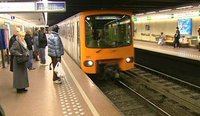
Brussels Metro Stinks

Metros in twelve world capitals were inspected by "mystery passengers".
Besides using their highly tuned sense of smell, they also stuck their noses into the state of information and ticket offices as well as testing out the level of customer service.
Brussels came a disappointing 11th out of the 12 metros inspected. Only the USA scored worse although the smell there was not deemed as pungent as under our capital city.
READ ON